


The International Education Quality Council (IEQC) functions as an autonomous accreditation body dedicated to establishing and verifying standards within the global education sector. Officially registered and operating from its headquarters in the United Kingdom, the organisation has been providing evaluation and accreditation services since its establishment in 2019. The foundation of IEQC’s methodology is a rigorous integration of internationally recognised frameworks. This includes the application of British educational quality benchmarks, alignment with European regulatory and quality assurance guidelines, consideration of World Bank principles for educational development efficacy, and adherence to relevant ISO management system standards for organisational process integrity. In line with its commitment to operational excellence, IEQC itself is certified against a comprehensive suite of over ten ISO standards, underscoring its systematic and transparent approach to all its accreditation activities.
Core Operational Philosophy and Institutional Prerequisites
At the heart of IEQC’s work is a commitment to a substantive, evidence-driven evaluation model that prioritises genuine institutional development over procedural formality. The organisation maintains a clear distinction between its comprehensive accreditation pathway and simpler, transactional certification services offered elsewhere. As a matter of policy, IEQC does not consider applications from institutions that have previously acquired credentials through such expedited, non-evaluative processes from other providers, as this conflicts with its foundational principle of merit-based assessment. A fundamental and non-negotiable prerequisite for any institution seeking IEQC accreditation is the demonstration of a stable and verifiable operational history spanning a minimum of three consecutive years prior to application. This criterion ensures that only entities with established governance, mature academic processes, and a track record of delivery enter the demanding accreditation review.
Process Scope, Phases, and Realistic Timelines
The accreditation process administered by IEQC is deliberately tailored to the scale, complexity, and specific context of the applying institution. The overall timeline is therefore variable and directly correlates to the depth of the audit required. For targeted, limited-scope accreditations—such as the validation of a specific professional development course, a specialised training module, or a singular certificate programme—the streamlined procedure can be initiated and substantially progressed within a baseline period of 21 business days. For comprehensive institutional evaluations, which encompass universities, major vocational colleges, multi-campus entities, and entire education systems, the procedure is inherently more extensive and rigorous. This full-scale review involves multiple, interdependent phases: an in-depth preliminary documentary analysis, a peer review conducted by an international panel of subject-matter experts, meticulous on-site inspections and stakeholder interviews, followed by a period of deliberation and report finalisation. For such major engagements, the entire process typically requires a period ranging from 3 to 9 months to ensure a thorough, fair, and conclusive outcome that truly reflects the institution’s quality and capacity.
Outcomes and the Comprehensive Value Proposition of Accreditation
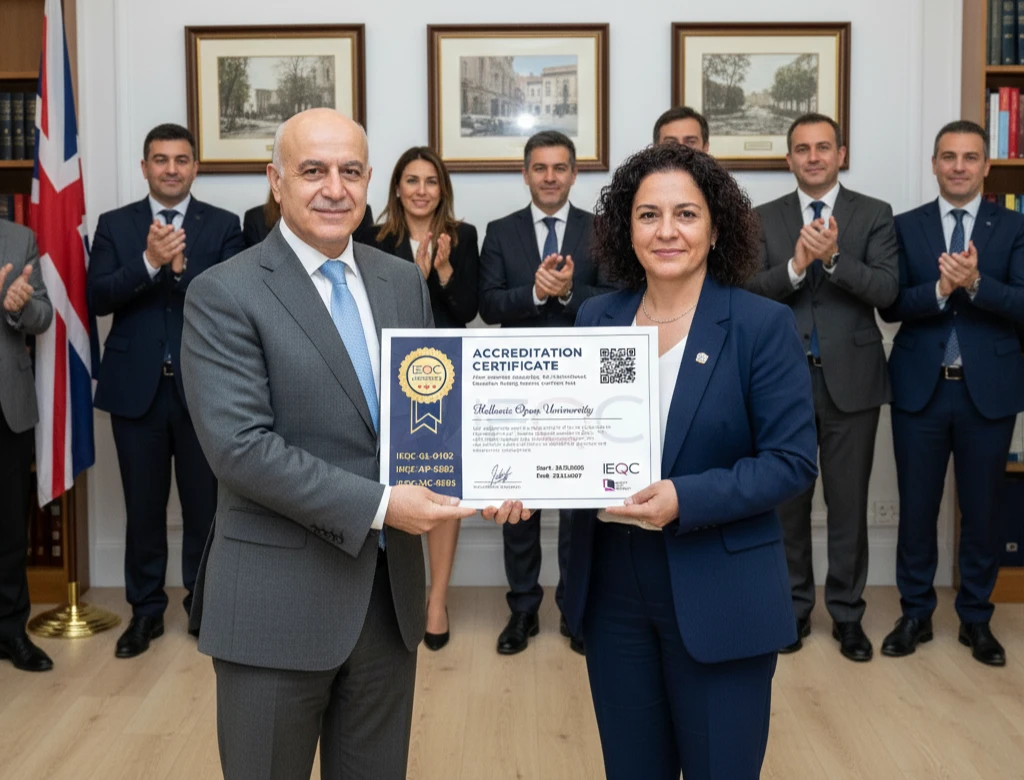
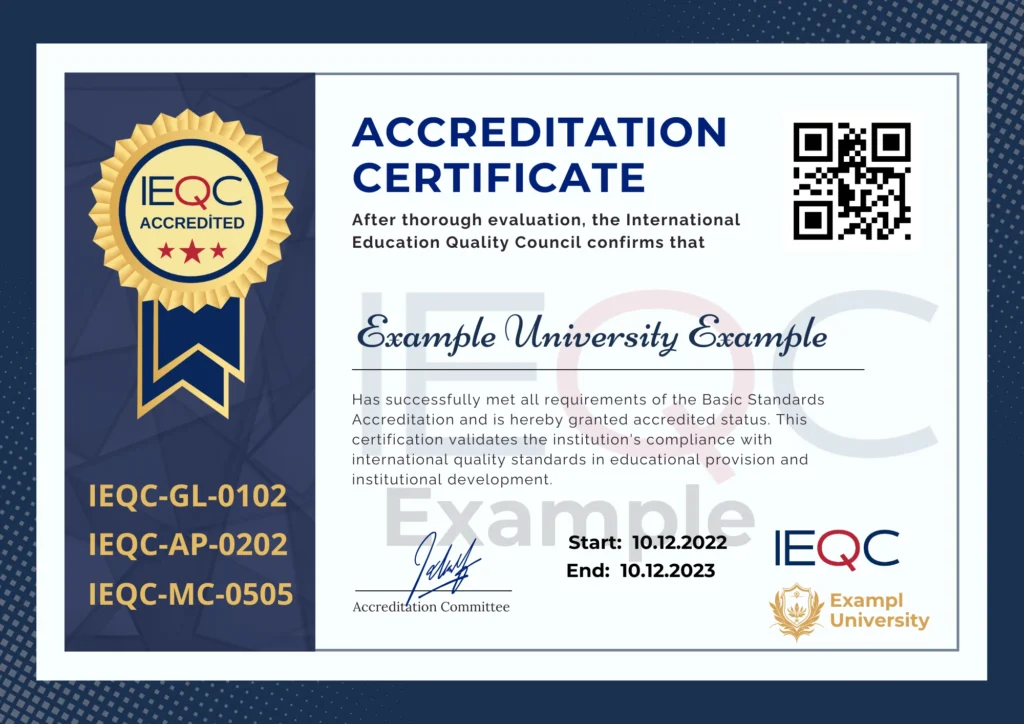
Successful navigation of the IEQC accreditation process culminates in the formal grant of accredited status, symbolised by the awarding of the official IEQC Accreditation Certificate. This achievement, however, represents far more than the receipt of a physical document. It unlocks a robust suite of professional advantages and partnership benefits designed to provide long-term value and support institutional growth on a global scale. The full spectrum of outcomes and entitlements includes:
- Formal Accreditation Award: The conferral of the official, serial-numbered IEQC Accreditation Certificate, valid for a defined cycle.
- Public Recognition and Listing: The accredited status and institutional profile are formally published and maintained on the IEQC official website’s public registry. This is often supplemented by an official public announcement, providing authoritative third-party validation to stakeholders, partners, and the media.
- Access to Exclusive Professional Development: Accredited institutions receive complimentary access passes to IEQC’s calendar of exclusive events, including expert-led seminars, specialised workshops, policy forums, and the annual global conference, facilitating cutting-edge knowledge exchange and leadership networking.
- Licensed Use of Accreditation Branding: The formal right to use the prestigious IEQC accreditation logo and related marks in the institution’s official communications, marketing collateral, and digital platforms. This serves as a globally recognised symbol of quality, enhancing institutional credibility, brand reputation, and competitive positioning.
- Integration into the IEQC Global Network: Automatic inclusion in IEQC’s exclusive network of accredited institutions worldwide. This facilitates opportunities for professional collaboration, joint academic and research initiatives, faculty and student exchange programmes, and strategic partnerships.
- Strategic Marketing and Communications Support: Accredited partners gain access to advisory support and resources from IEQC on best practices for effectively communicating and leveraging their accredited status. This includes guidance on public relations, student recruitment campaigns, and engagement with industry stakeholders to maximise the return on their accreditation investment.
In essence, IEQC accreditation constitutes a transformative professional partnership. It provides an external, expert validation of institutional quality, a structured framework for continuous improvement, and a powerful portfolio of tools and recognitions that collectively elevate an institution’s standing, influence, and effectiveness within the international education community.